
Power Triode Tubes For Sale: Industrial Triode Power Grid Tubes
For demanding RF and industrial applications, our triodes deliver stable output, long service life, and predictable performance. Whether you’re replacing legacy power triode tubes or specifying a new triode vacuum tube for a high-duty amplifier, Penta Labs supplies rigorously tested parts with full documentation and expert support. From broadcast and dielectric heating to laboratory and medical systems, each unit is built for clean signal integrity and dependable uptime.

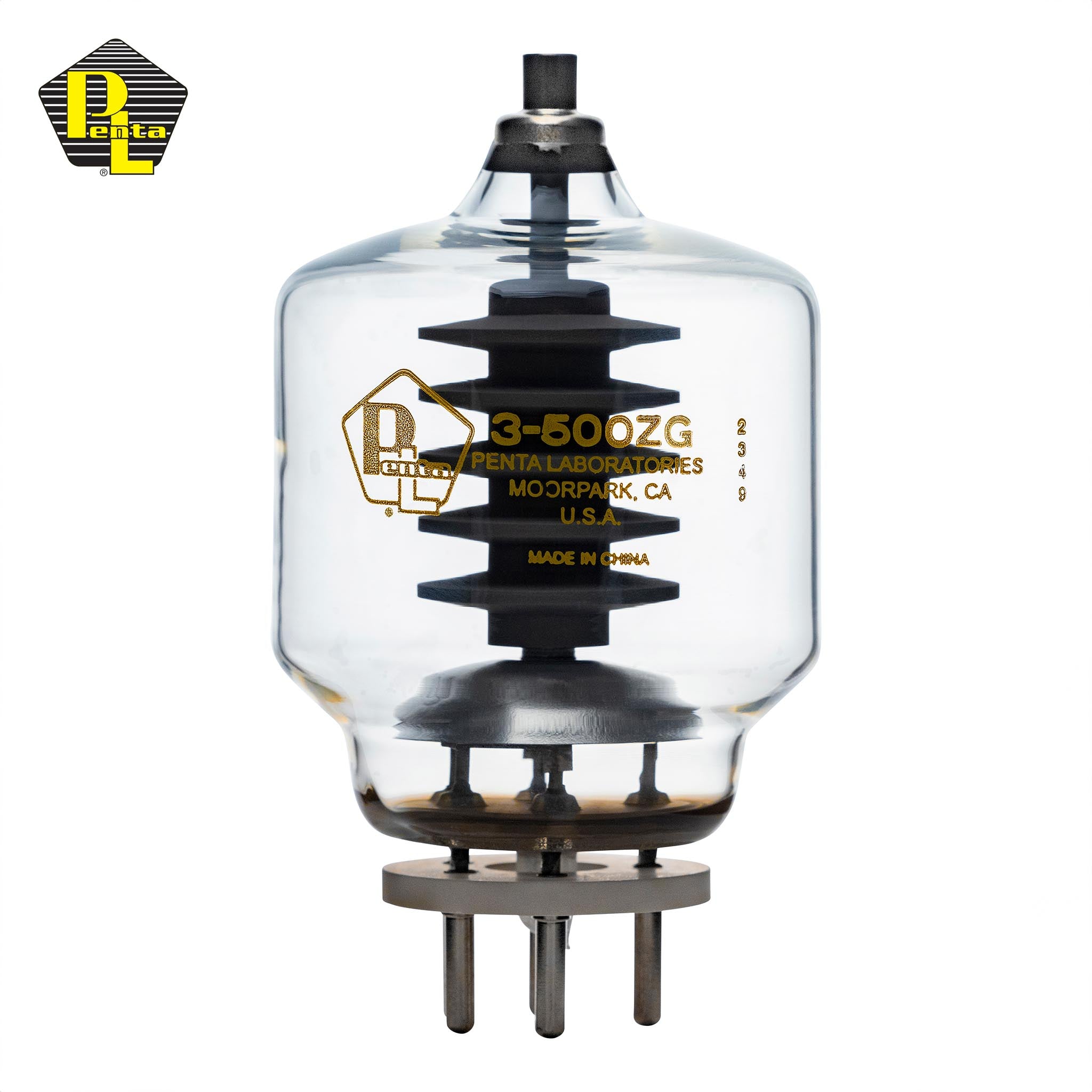


ITL5-1 / YD1160FL

3CX6000A7/YU-148/YU148 6000 W HIGH MU POWER TRIODE
Triode Tube Cooling Comparison Chart
| Type of Triode Tube | Brief Description | Type of Cooling | Ideal Use |
|---|---|---|---|
| Water-cooled | Built for high plate-dissipation, continuous-duty service where direct heat removal helps maintain tight thermal control and stable output. | Closed-loop liquid cooling, typically deionized water through the anode/cooling path. | High-duty RF welders, plasma systems, and large transmitters. |
| Air-cooled | Designed for moderate to high intermittent power where simpler integration and easier maintenance matter more than liquid-cooling capacity. | Forced air through finned anodes, ducting, and airflow management. | Mid-power RF generators, broadcast drivers, R&D benches, and retrofit upgrades. |
| Vapor-cooled | Uses phase-change cooling to move large thermal loads efficiently while keeping the thermal system compact and thermally stable. | Working fluid evaporates at the anode and condenses in a heat-exchanger before recirculating. | High-average-power systems where footprint and limited coolant flow are important considerations. |
How to Choose Power Triode Tubes by Power Class
Choosing among power triode tubes starts with the electrical and thermal requirements of the equipment, not wattage alone. Confirm the original tube number, plate dissipation, operating frequency, socket or mechanical interface, duty cycle, and cooling system before specifying a replacement. For MRI or radar equipment, the existing system design should control the choice because compatibility can depend on the complete RF chain, not simply the nominal power class. This approach narrows power triode tubes by system requirements before comparing individual models.
Around 2.5 to 3 kW
For equipment designed around the lower end of this range, the 3CX2500H3 represents a 2,500-watt plate-dissipation class, while the 3CX3000A7 is another option in the same general selection band. These power grid tubes can be appropriate where the system calls for a compact to mid-power RF triode, but the correct match still depends on cooling, socketing, voltage, and frequency requirements. A triode vacuum tube should never be selected by power rating alone.
Around 6 kW
The 3CX6000A7 moves into a higher-power class for demanding RF amplifier and transmitter systems. Penta’s current product information identifies forced-air cooling and use in high-power RF systems, making this range relevant when triode electronics must support heavier operating loads and extended duty cycles. For triode electronics operating in this power class, thermal and mechanical fit remain just as important as output capability. If you are replacing an installed tube, confirm the original part number and interface before changing models.
Around 10 to 15 kW
For higher-power equipment, the 3CX10,000A7 and 3CX15,000A7 extend the range to 10 kW and 15 kW plate-dissipation classes. Penta identifies these models for professional RF applications, including MRI RF amplifier systems and industrial RF environments. When radar, medical, or industrial equipment is involved, use the OEM system requirements to narrow the power triode tubes under consideration before comparing availability or pricing. At this level, power triode tubes should be evaluated as part of the complete RF system rather than by wattage in isolation.
Across the 3CX2500H3 through 3CX15,000A7 range, the safest selection path is to match the electrical, mechanical, and cooling requirements first, then compare the available power grid tubes within that envelope. If the existing part number is obsolete or unclear, Penta Laboratories can help identify compatible replacement tubes and review the information needed to narrow the choice. This is especially important for specialized triode electronics used in MRI, radar, broadcast, or industrial RF systems.
Triode Tubes by Power Class
Use this chart as a starting point for comparing the power classes discussed in the article. Cooling and application fit are model- and system-specific, so the original equipment requirements should inform final tube selection.
| Power Class | Example Applications | Example Model Numbers |
|---|---|---|
| Around 2.5 to 3 kW | Compact to mid-power RF amplifiers, RF generators, and other systems. | 3CX2500H3; 3CX3000A7 |
| Around 6 kW | Demanding RF amplifier and transmitter systems that require a higher-power triode class and the correct thermal and mechanical fit. | 3CX6000A7 |
| Around 10 to 15 kW | Professional RF applications, including MRI RF amplifier systems, industrial RF environments, and radar systems. | 3CX10,000A7; 3CX15,000A7 |
Frequently Asked Questions
Be the First to Know. Sign up to newsletter today.